24-Hour Ambulatory Blood Pressure Monitoring
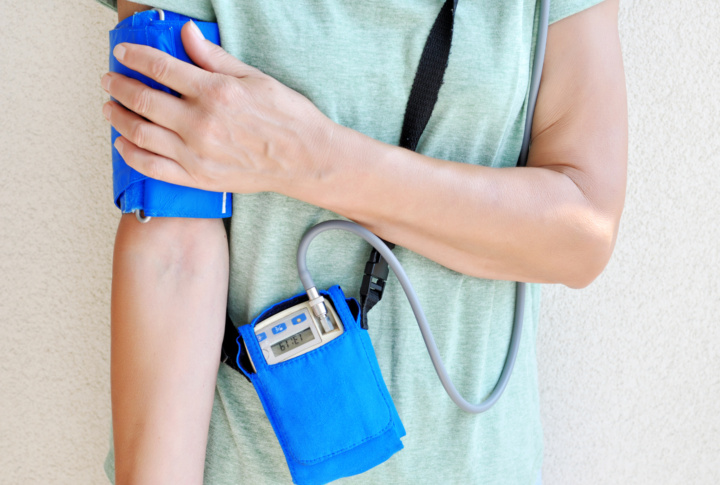
An ambulatory blood pressure monitor is a small, portable device that measures your blood pressure over 24 hours during your usual activities and while you sleep. This test is also called ambulatory blood pressure monitoring (ABPM).
What is blood pressure?
Arterial blood pressure is the pressure in the arteries that carry blood from the heart to the rest of the body. It is a vital sign and is necessary for blood to circulate. Blood pressure varies throughout the day, but should stay within its upper limits. High blood pressure (arterial hypertension) puts strain on the heart and blood vessel walls and can damage other organs.
Persistently high blood pressure is a major risk factor for heart failure, coronary artery disease, heart valve disease, chronic kidney disease and stroke, among other conditions. It is sometimes called a “silent killer” because symptoms may appear only after damage has occurred. Timely diagnosis and appropriate treatment can help prevent life-threatening complications.
How is blood pressure measured?
Blood pressure can be measured at home or in a clinic using a cuff around the upper arm or wrist. When a reading starts, the cuff inflates until it briefly stops blood flow, then deflates while the device measures changes in pressure.
A blood pressure reading has two numbers.
- The first, systolic pressure, is the highest pressure in the arteries as the heart pumps blood out.
- The second, diastolic pressure, is the lowest pressure in the arteries as the heart relaxes and fills with blood.
A typical normal reading is 120/80 mmHg. Blood pressure above 140/90 mmHg is considered high.
Sometimes a standard reading is insufficient for a diagnosis. Your doctor may then recommend wearing a blood pressure monitor for 24 hours.
Get in touch with our team
BOOK AN EXAMINATIONWhat is ambulatory blood pressure monitoring?
A small portable monitor measures blood pressure at intervals over 24 hours, during the day and at night. Typically it takes a reading every 30 minutes during the day and every 45 minutes at night. The intervals can be adjusted according to clinical need.
You keep the monitor with you as you go about your usual activities, with the cuff fastened around your upper arm.
What advantage does 24-hour monitoring have over a single reading?
The monitor takes repeated readings in different situations, day and night, even when you have no symptoms. This gives a more accurate picture of your usual blood pressure. Your doctor can see when and how often it changes and use that information to guide treatment. A single reading within the normal range does not always mean your blood pressure is normal throughout the day. The reverse can also happen. With the white-coat effect, blood pressure rises when a health professional takes the reading. Stress, anxiety or previous unpleasant experiences can contribute. Relying on a clinic reading alone could then lead to a diagnosis of hypertension even though your blood pressure is normal at other times.
When is ambulatory blood pressure monitoring needed?
This test helps confirm high blood pressure, identify when it fluctuates most over a 24-hour period and assess how well prescribed treatment is working.
Your doctor may also recommend it in the following situations.
- high blood pressure that develops during pregnancy
- people whose blood pressure falls when they stand up (orthostatic hypotension)
- suspected masked hypertension, when readings are normal in the clinic but high in everyday life
- nocturnal hypertension (high blood pressure at night)
- checking the effectiveness of prescribed blood pressure medication
- suspected white-coat hypertension, when blood pressure is high in the clinic but normal at home
How does the monitor work?
You wear a small recorder in a pouch around your waist and a cuff around your upper arm for 24 hours. The cuff inflates and deflates automatically. It usually takes a reading every 30 minutes during the day and every 45 minutes at night, although the intervals can be adjusted as needed. The recorder stores your blood pressure and heart rate.
When a reading starts, keep still for a few moments. Return to the clinic 24 hours after fitting to have the device removed and the recording reviewed.
Preparing for 24-hour blood pressure monitoring
For a representative recording, follow these suggestions.
- Choose a 24-hour period that reflects your normal routine, such as a working day rather than a weekend if that is more typical for you.
- Keep an activity diary. Note when you get up and go to bed, when you take medication and eat meals, and any symptoms you experience.
While wearing the monitor, avoid showering and bathing.
Instructions for wearing the monitor
Wear loose clothing with sleeves wide enough to fit over the cuff.
Keep the monitor dry. Do not bathe or shower until it has been removed.
How much does ambulatory blood pressure monitoring cost?
You can find the cost of the test in our current price list (in Croatian). For more information, call +385 1 5005 970 or email info@sinteza.hr
This service is provided at the location:
- For 16 years, the first choice for our clientsSinteza - Folnegovićeva
Frequently Asked Questions
When is 24-hour blood pressure monitoring recommended?
The test is most often used to confirm high blood pressure (hypertension) or assess how well blood pressure medication is working.
It may also be recommended in the following situations.
- high blood pressure that develops during pregnancy
- a drop in blood pressure on standing (orthostatic hypotension)
- suspected masked hypertension, when readings are normal in the clinic but high at other times
- high blood pressure at night (nocturnal hypertension)
- readings that are high in the clinic but normal at home
Is 24-hour blood pressure monitoring painful?
Wearing the monitor is painless. You will feel mild pressure as the cuff inflates. Temporary skin changes, such as redness, can sometimes occur.
Can I move around and work normally while wearing the device?
You can move around and work normally. The aim is to follow your usual routine, including everyday activities during which you typically notice symptoms.
Is ambulatory blood pressure monitoring reliable?
A 24-hour monitor takes repeated, precise measurements in different situations throughout the day. This gives your doctor a fuller picture than a single conventional reading.


